Bridging the Bench: What Academic Nanotechnology Researchers Must Understand Before Launching a Company

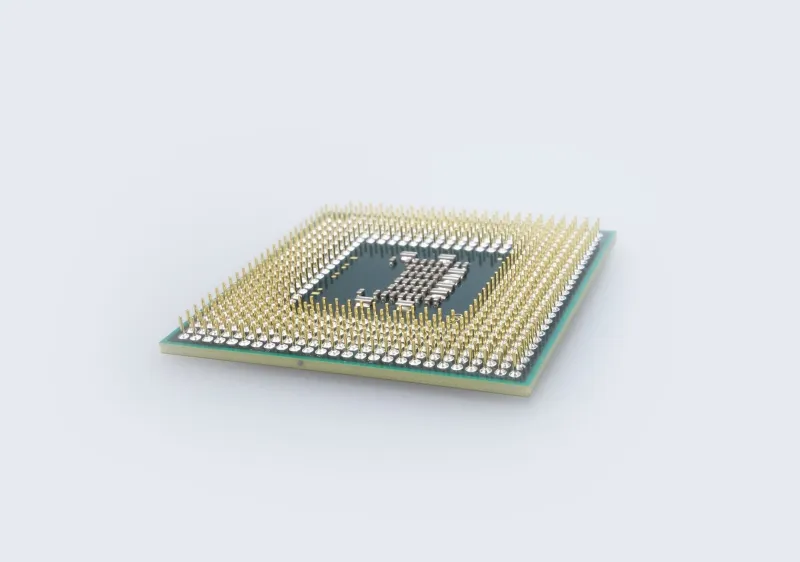
Photo: DutchTreat, CC BY-SA 4.0, via Wikimedia Commons
Every year, American universities produce thousands of nanotechnology research papers describing materials, devices, and processes with genuine commercial potential. A small fraction of that work advances to patent filing. A smaller fraction still reaches the stage of a startup company. And of those companies, the majority fail within five years—not because the underlying science was flawed, but because the researchers who founded them underestimated, or were simply unprepared for, the distance between laboratory demonstration and commercial product.
This is not a counsel of discouragement. Nanotech startups do succeed. Several have grown into companies with hundreds of employees and hundreds of millions in revenue. But the ones that succeed tend to share certain characteristics in how they approached the transition from academic research to commercial enterprise—characteristics that are learnable, even if they are rarely taught.
Understanding What You Actually Own
The first and most common misconception among academic researchers entering the commercial space concerns intellectual property ownership. In the vast majority of American research universities, IP generated using university facilities, funding, or time belongs to the institution, not the individual researcher. This is not a technicality. It is a foundational commercial reality that shapes every subsequent step of the commercialization process.
Most universities license technology to spinout companies through their technology transfer office, typically in exchange for an equity stake in the new venture, an upfront licensing fee, and ongoing royalties on revenue. The terms of these licenses vary considerably across institutions, and negotiating them requires more sophistication than most graduate students or early-career faculty possess. Before taking any steps toward company formation, a researcher should engage directly with their institution's technology transfer office, understand what has been filed and when, and retain independent legal counsel—not rely solely on the university's attorneys, whose obligations run to the institution, not the inventor.
Patent timing matters enormously. Academic culture prizes rapid publication; patent law requires that applications be filed before public disclosure to preserve certain rights, particularly in international markets. A single conference presentation or preprint posting can permanently foreclose patent protection in jurisdictions outside the United States. Researchers with commercial aspirations should establish a clear protocol with their technology transfer office for reviewing any planned disclosure before it occurs.
The Scaling Problem Is Not What You Think
Nanotechnology presents scaling challenges that are qualitatively different from those encountered in most other advanced material or device sectors. A synthesis process that works reliably in a 50-milliliter flask may behave entirely differently at ten liters, and differently again at one thousand liters. Heat transfer, mixing dynamics, nucleation kinetics, and surface-to-volume ratios all change in ways that are difficult to predict from first principles and expensive to characterize empirically.
This is not a solvable problem in the abstract—it must be solved for each specific material or process, through iterative experimentation that consumes time and capital. Researchers who have spent their careers optimizing bench-scale synthesis are frequently surprised to discover that their process knowledge does not transfer directly to pilot-scale production. Hiring or partnering with engineers who have specific experience in process scale-up—chemical engineers, particularly those with backgrounds in fine chemicals or specialty materials manufacturing—is among the highest-leverage early investments a nanotech startup can make.
Characterization at scale presents a related challenge. Academic research typically relies on high-resolution microscopy, synchrotron facilities, and other analytical tools that are available at universities but not in manufacturing environments. Developing scalable quality control methods—ones that can verify material properties rapidly and at production volumes—is a technical challenge that must be addressed before any serious manufacturing partner or customer will engage.
What Investors Are Actually Evaluating
Nanotechnology has a complicated history with venture capital. The first nanotech investment boom, which peaked in the mid-2000s, generated enormous enthusiasm and substantial capital deployment, followed by a period of disappointment as many companies failed to translate laboratory results into commercial products. That experience left a lasting impression on the investor community. Today's nanotech founders encounter a more skeptical, more technically sophisticated investor base than their predecessors did—one that has seen the gap between scientific novelty and commercial viability play out many times.
What early-stage nanotech investors are evaluating, in rough order of priority, is this: first, the size and accessibility of the target market; second, the defensibility of the IP position; third, evidence of scalability beyond the laboratory; and fourth, the composition and credibility of the founding team. Scientific novelty, while necessary, is not sufficient and is frequently not even the primary consideration.
Founders who lead with technical detail and follow with market analysis have the priorities inverted from an investor's perspective. The question "who will pay for this, at what price, and why will they choose your product over alternatives" must be answered convincingly before a sophisticated investor will spend significant time evaluating the underlying science.
For nanotech specifically, investors also probe the regulatory pathway with particular care. A material or device that requires FDA approval, EPA review, or TSCA notification faces a longer and more expensive path to revenue than one that does not. Founders should be prepared to discuss regulatory strategy in concrete terms—not as an afterthought, but as a core element of the business plan.
Learning from What Has Failed
The history of American nanotech startups offers instructive cautionary patterns. Companies that licensed technology broadly defined—a platform material with many potential applications rather than a specific product for a specific market—frequently exhausted their runway before identifying a commercially viable use case. The appeal of platform strategies is understandable: a researcher who has developed a genuinely novel nanomaterial may see dozens of potential applications. But investors and customers require focus, and diffuse strategies consume resources without generating the proof points needed to raise subsequent rounds.
Companies that underinvested in manufacturing process development—assuming that scale-up problems could be solved later, with later-stage capital—repeatedly discovered that those problems were not solvable quickly or cheaply, and that customers would not commit to supply agreements until manufacturing reliability was demonstrated. The time to begin solving scale-up problems is before the first customer conversation, not after.
Companies that neglected to build commercial and operational expertise into their founding teams—relying on scientific founders to perform functions for which they had no training—consistently struggled with go-to-market execution, financial management, and customer relationship development. The most durable nanotech startups from American institutions have typically paired scientific founders with experienced commercial operators early, before the absence of that expertise created costly mistakes.
The Path Forward
For researchers genuinely committed to seeing their work reach commercial application, the transition from academic laboratory to startup is navigable—but it demands an honest assessment of what the commercial world requires and a willingness to build or acquire capabilities that scientific training does not provide. Engaging early with technology transfer professionals, seeking out mentors who have completed the journey, and connecting with programs such as NSF's I-Corps—which provides structured training in customer discovery for academic researchers—can compress the learning curve significantly.
The nanoscale innovations emerging from American research institutions represent genuine economic and strategic assets. Realizing their value requires more than scientific excellence. It requires the deliberate, sometimes humbling work of learning to operate in a world governed by markets, not peer review.