Hiring at the Atomic Level: Why American Industry Cannot Fill Its Nanotechnology Roles
In the spring of 2023, a semiconductor materials company headquartered in San Jose posted three open positions for nanofabrication process engineers. Within six weeks, the company received more than four hundred applications. After a rigorous screening process, hiring managers extended offers to exactly one candidate.
"The volume of applicants is not the problem," said the company's director of materials engineering, who requested anonymity to speak candidly about internal hiring challenges. "The problem is that almost nobody coming out of a four-year program—or even a master's program—has touched the equipment we actually use. They know the theory. They do not know the process."
That disconnect, repeated across dozens of conversations with hiring managers, academic advisors, and recent graduates, reveals a structural fault line running through America's nanotechnology workforce pipeline. As federal investment in nanoscale research accelerates under initiatives tied to the CHIPS and Science Act, the human capital required to execute that research remains stubbornly scarce.
The Credential Gap Is Not the Same as the Skills Gap
The United States graduates thousands of engineers each year with coursework touching on nanoscale phenomena. Materials science, electrical engineering, and chemical engineering programs at institutions including MIT, Stanford, Georgia Tech, and the University of California system regularly produce candidates with strong theoretical grounding in quantum mechanics, surface chemistry, and thin-film deposition.
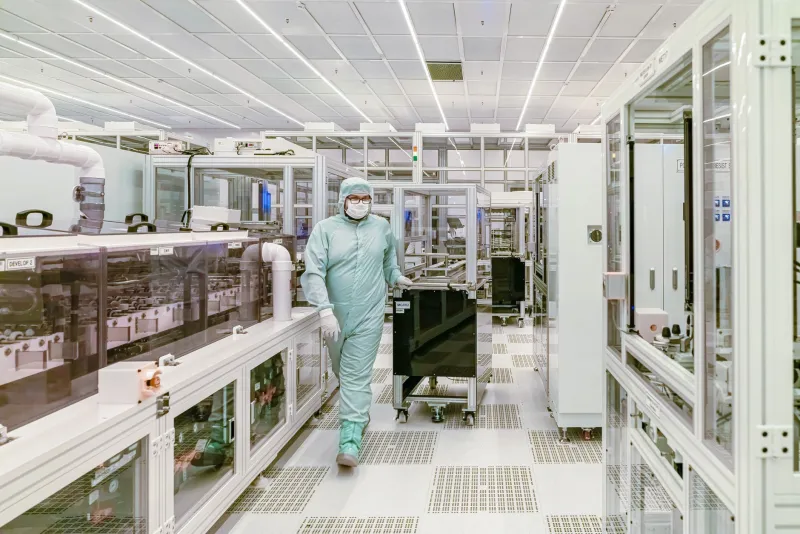
What those programs frequently omit, however, is sustained, hands-on engagement with the instrumentation that defines industrial nanofabrication. Scanning electron microscopes, atomic layer deposition reactors, and focused ion beam systems are expensive to operate and maintain. Many universities restrict access to advanced cleanroom facilities to graduate students working on specific funded projects, leaving undergraduates and even many master's candidates without meaningful exposure.
"I spent two semesters studying ALD in lectures and textbooks," said one recent master's graduate from a well-regarded Midwestern engineering program, now employed at a defense contractor in Virginia after an extended job search. "When I interviewed at three different semiconductor companies, every single hiring manager asked me how many hours I had logged inside a cleanroom. The honest answer was fewer than twenty. That ended each conversation pretty quickly."
Industry surveys reinforce the anecdote. A 2023 workforce analysis conducted by the National Nanotechnology Initiative found that more than sixty percent of responding employers identified practical fabrication experience as the single most difficult qualification to find in applicants, outranking advanced degree credentials and publication records.
Where the Graduates Are Going
The mismatch between supply and demand is not simply a matter of too few graduates entering the field. It is also a matter of graduates being absorbed into research tracks—academic postdoctoral positions, national laboratory fellowships, and government research roles—that do not translate directly into the manufacturing and process engineering roles where industry shortages are most acute.
American universities, incentivized by federal grant structures that reward publication output and basic research breakthroughs, tend to funnel their most capable nanotechnology graduates into academia. The result is a peculiar inversion: the engineers with the deepest technical knowledge are often the least likely to enter commercial production environments.
"There is a cultural divide," acknowledged a department chair at a major public research university in the Southeast, who has watched students choose postdoctoral positions over industry offers at a ratio of roughly three to one. "We train people to ask fundamental questions. Industry needs people to answer applied ones. Those are not always the same person."
Meanwhile, companies in South Korea, Taiwan, and increasingly China have structured recruitment pipelines that specifically target American graduates who feel undervalued or poorly matched to available domestic roles. Several engineers interviewed for this article described receiving unsolicited outreach from foreign semiconductor manufacturers offering salaries and relocation packages that domestic firms had not matched.
The Community College Opportunity Nobody Is Seizing
One frequently overlooked dimension of the workforce crisis involves the technician tier—the skilled operators and process technicians who keep fabrication lines running but who do not require doctoral credentials. Community colleges and technical institutes in states including Arizona, New York, and North Carolina have developed nanofabrication technician certificate programs, some in direct partnership with regional employers.
Enrollment in those programs, however, remains far below what industry needs. Career counselors at the high school level rarely steer students toward nanoscale technician tracks, in part because the field lacks the cultural visibility of software engineering or biomedical careers. The result is a bottleneck not only at the top of the credential ladder but across every rung.
"We could place every graduate we produce in a full-time job the week they finish the program," said a program coordinator at a community college in the Phoenix metropolitan area that runs a semiconductor process technology certificate. "We have employers calling us before students finish their coursework. But we cannot get enough students in the door to begin with."
What Employers Say They Actually Need
Conversations with hiring managers across the semiconductor, advanced materials, and medical device sectors reveal a consistent wish list that diverges from what standard engineering curricula deliver. Employers consistently cite proficiency with specific deposition and characterization tools, experience troubleshooting process variance in a production environment, and familiarity with statistical process control methods as their highest priorities—none of which appear prominently in most graduate syllabi.
Soft skills also surface repeatedly. Engineers who can communicate across disciplinary boundaries—translating nanoscale phenomena into manufacturing process parameters, or presenting material characterization data to non-specialist product teams—are described as genuinely rare.
"The best hire I made in the last five years was someone who could explain why a surface energy issue was causing adhesion failures to a product manager who had never taken a chemistry course," said a vice president of engineering at a nanomaterials startup in the Boston area. "That person did not have the most impressive publication list. But they understood the whole system."
Structural Reforms and What They Would Require
Addressing the pipeline failure will require coordinated action from universities, employers, and federal agencies that has so far remained largely aspirational. Several proposals circulating among workforce development advocates include expanding NSF funding specifically tied to industrial internship requirements, creating tax incentives for companies that host undergraduate cleanroom rotations, and redesigning graduate program milestones to reward industry collaboration alongside publication output.
Some universities are moving independently. Carnegie Mellon and Purdue have each launched initiatives to embed industry-sponsored fabrication projects into graduate curricula, allowing students to work on real process challenges while earning academic credit. Early results from those programs show meaningfully higher rates of industry placement among participants.
Without broader adoption, however, the gap will persist—and the geopolitical consequences will compound. Every nanotechnology role that goes unfilled in an American company represents capacity that competitors abroad are actively building. At the atomic scale, the margin for complacency is effectively zero.